Théâtre d’ombres vieux de plus de mille ans, le wayang demeure l’une des formes artistiques les plus vivantes de Java. Le label 1000hz s’y est intéressé et vient de sortir Caraka Handayapati, fruit d’une collaboration entre la Kasatriyan Javanese Arts Community et le Warsaw Gamelan Group. Musiques Obliques s’est entretenu avec Dawid Martin et Ki Bimo Sinung Widagdo, respectivement piliers des ensembles polonais et indonésien, et experts en la matière. Ils reviennent sur la capacité du wayang à se réinventer à travers les siècles, de la scène à la radio, puis aux plateformes numériques, ainsi que sur cette aventure interculturelle qui révèle les traditions javanaises aux publics occidentaux. Musiques Obliques vous propose d’écouter la mixtape exclusive généreusement offerte par le Warsaw Gamelan Group, en lisant cet entretien d’une grande richesse culturelle !
english below
Le wayang kulit est une tradition qui a survécu pendant plus de mille ans. Selon vous, qu’est-ce qui la rend encore pertinente et intéressante pour le public contemporain ?
Dawid Martin :
À mon avis, la force du wayang et sa capacité à séduire génération après génération tiennent au fait que, bien qu’il s’agisse d’un art régi par des règles consacrées par la tradition, concernant par exemple la forme et la fabrication des marionnettes, les histoires racontées ou encore la musique, il laisse néanmoins aux artistes une grande liberté de création.
Contrairement à l’opéra occidental, où chaque mot est consigné dans un livret et chaque note dans une partition, une représentation de wayang est une œuvre ouverte. Le marionnettiste et narrateur, appelé dhalang, s’écarte fréquemment de l’intrigue principale du Lakon, ces récits inspirés des versions javanisées du Ramayana et du Mahabharata, ou encore du monde des légendes locales javanaises.
Comme le wayang possède traditionnellement une forte dimension morale, où le bien finit toujours par triompher du mal, le dhalang fait bien plus que raconter l’histoire principale. Il développe de nombreuses intrigues secondaires et commente l’actualité du pays comme celle du reste du monde, souvent avec humour et sans trop se soucier de la susceptibilité des responsables politiques. Cette capacité à commenter la vie contemporaine constitue une part essentielle du lien qu’il entretient avec son public.
Y a-t-il beaucoup d’improvisation et d’interactions avec le public ?
Dawid Martin :
Il existe une grande liberté sur le plan musical. Les représentations traditionnelles de wayang peuvent durer du crépuscule jusqu’à l’aube et, aux côtés des gendhing wayangan (le répertoire traditionnel associé à certaines scènes ou séquences du spectacle), il y a largement de la place pour d’autres musiques.
Celles-ci peuvent inclure de nouvelles compositions, appelées kreasi baru, qui deviennent souvent une sorte de signature musicale propre à un dhalang et à son ensemble. Elles peuvent aussi inclure des chansons populaires javanaises que les spectateurs peuvent demander pendant la représentation, généralement moyennant une modeste contribution.
Une autre source de l’attrait du wayang réside précisément dans son caractère interactif. Dans une certaine mesure, le public peut interagir avec le dhalang et devenir ainsi une sorte de co-créateur du spectacle, aussi bien sur le plan narratif que musical.
La popularité durable du wayang tient également au fait qu’au cours du XXe siècle, il a rapidement trouvé sa place dans les médias de masse indonésiens. Dès l’apparition de la radio à Java pendant l’entre-deux-guerres, des représentations de wayang furent diffusées sur les stations locales, donnant naissance à une nouvelle forme de cet art : le drame radiophonique de wayang, qui est aussi, d’une certaine manière, ce que représente notre album. La télévision a ajouté une dimension supplémentaire en permettant au public de voir l’action se dérouler à l’écran. Cependant, l’accès à la radio et à la télévision restait largement réservé aux dhalangs les plus célèbres et les plus respectés. Internet a complètement changé la donne. Aujourd’hui, pratiquement n’importe quel dhalang peut diffuser ses spectacles en direct et les rendre accessibles à un public situé partout dans le monde.
Grâce aux discussions en direct sur YouTube et aux paiements en ligne, les spectateurs peuvent toujours demander l’interprétation de morceaux ou de chansons spécifiques, comme ils le font depuis des générations. Cette révolution numérique a, en réalité, provoqué une véritable renaissance du wayang. Aujourd’hui, chaque après-midi en Europe, alors que la nuit est déjà tombée en Indonésie, je peux simplement sortir mon smartphone de ma poche, ouvrir YouTube et choisir parmi plusieurs, voire une dizaine de représentations de wayang diffusées en direct.
Certaines d’entre elles sont suivies par des dizaines de milliers de personnes, dont beaucoup participent activement aux discussions en direct. C’est un magnifique exemple de la manière dont les nouvelles technologies peuvent contribuer à préserver, soutenir et faire évoluer des traditions vieilles de plusieurs siècles.
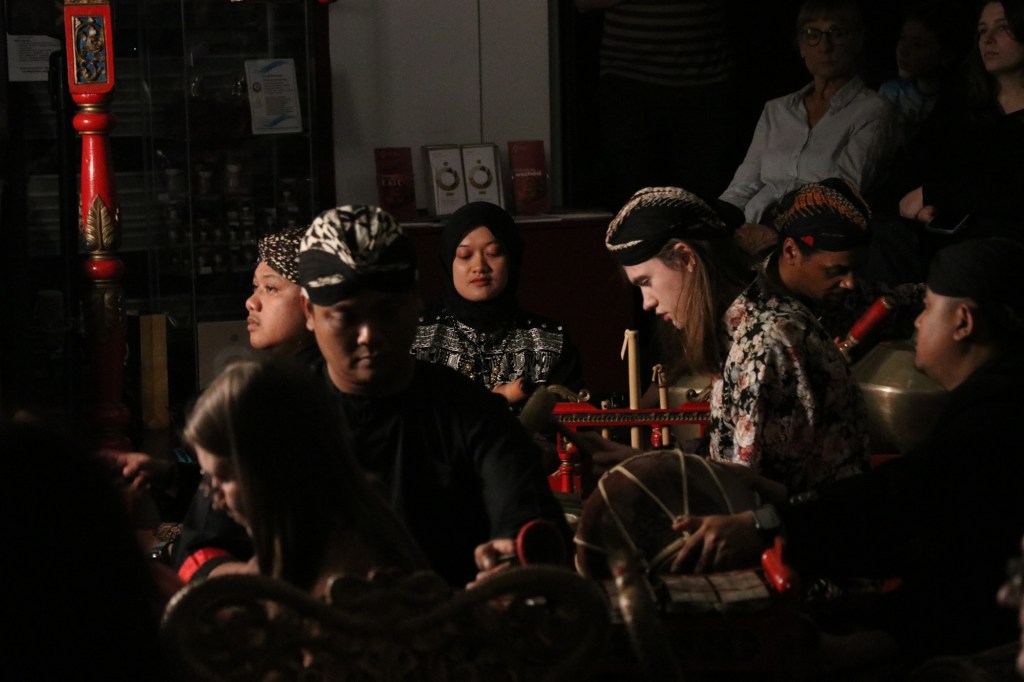
Notre époque numérique aide-t-elle cette tradition à trouver un nouveau souffle, de nouvelles formes ?
Ki Bimo Sinung Widagdo :
Absolument. À mesure que les temps changent et que nous entrons dans l’ère numérique, le wayang n’est plus obligé de rester cantonné à sa forme traditionnelle. Cela répond en partie à la perception de certains spectateurs, qui peuvent considérer le wayang comme ennuyeux, dépassé, voire comme quelque chose qui les endort. Face à ces préjugés, les créateurs et les dalang explorent constamment de nouvelles façons de faire évoluer cet art, non seulement dans sa mise en scène, mais aussi dans la conception et la fabrication mêmes des marionnettes.
Aujourd’hui, le wayang évolue rapidement pour s’adapter aux transformations du monde qui l’entoure. L’ère numérique constitue un exemple particulièrement parlant de cette évolution. Un nombre croissant de spectacles de wayang intègrent désormais des éléments multimédias, adaptant la forme des représentations aux nouvelles façons dont les publics contemporains découvrent et consomment la culture.
Certaines productions adoptent un langage visuel plus proche de celui du cinéma, tandis que l’indonésien tend à remplacer de plus en plus le javanais comme langue de représentation. Cela permet de rendre les histoires plus accessibles aux jeunes générations en Indonésie.
Caraka Handayapati est le résultat d’une collaboration entre des artistes indonésiens et polonais. Comment ce partenariat interculturel est-il né ? Qui en a eu l’idée, et pourquoi ?
Dawid Martin :
L’initiative de cette collaboration est venue de nos amis de la Kasatriyan Javanese Arts Community. Ils avaient obtenu l’opportunité de bénéficier d’un financement du ministère indonésien de la Culture pour mener un projet à l’étranger et recherchaient un partenaire en Europe. Il se trouve que nous avions un ami commun, Leon Gilberto Medellin, musicien de gamelan originaire du Mexique, qui nous a mis en relation.
Lorsque Santi (Wahyu Candra Prasanti) m’a appelé pour me proposer ce projet, je n’ai pas hésité longtemps. J’ai accueilli cette opportunité à bras ouverts, car les projets menés avec des artistes indonésiens apportent énormément à notre ensemble. Celui-ci est lui-même interculturel, réunissant des Polonais et des Indonésiens vivant en Pologne.
La venue en Pologne de maîtres de la tradition tels que les membres de la Kasatriyan Javanese Arts Community nous offre également une formidable occasion de progresser, puisque nous pouvons apprendre énormément à leurs côtés lors des répétitions communes. Et c’est exactement ce qui s’est produit dans ce projet.
Il y avait aussi une autre raison pour laquelle le moment était particulièrement bien choisi. Lorsque Santi m’a contacté, nous étions en train de préparer, avec le Musée d’Asie et du Pacifique ainsi que l’ambassade d’Indonésie à Varsovie, un grand événement consacré à la promotion de la culture indonésienne en Pologne, appelé Hari Nusantara. J’ai immédiatement pensé qu’une représentation de wayang kulit, le théâtre d’ombres javanais, constituerait la manière idéale de clôturer cet événement.
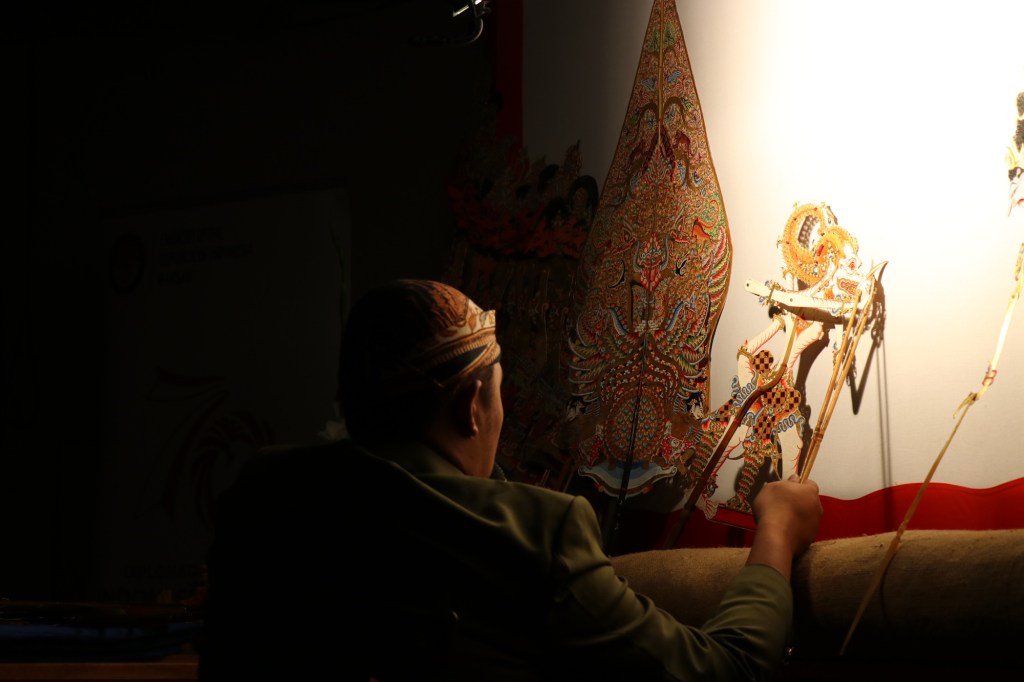
Comment s’est déroulé le processus de création ?
Dawid Martin :
Notre dhalang, Ki Bimo Sinung Widagdo, a travaillé sur l’histoire, tandis que Ganang Windu Tri Nugroho a sélectionné et arrangé la musique. Il m’a envoyé par e-mail les partitions des différents morceaux, ce qui nous a permis de commencer à les répéter ici, à Varsovie.
Une fois le spectacle entièrement élaboré, nos amis en ont enregistré une vidéo à Jakarta, peu avant leur départ pour la Pologne. Ils l’ont interprété avec un ensemble réduit lors d’une répétition et nous ont envoyé l’enregistrement afin que nous puissions nous familiariser avec le concept dans son ensemble.
Lorsqu’ils sont finalement arrivés en Pologne, nous disposions de moins d’une semaine pour préparer le spectacle et réaliser l’enregistrement. Nous avons répété ensemble de très nombreuses heures chaque jour et nous nous sommes énormément amusés. Nous avons complètement perdu la notion du temps et n’avions qu’une seule envie : jouer encore et encore.
Avez-vous dû surmonter certaines barrières naturelles entre vous ?
Dawid Martin :
Nous n’avons ressenti aucune barrière culturelle entre nous. D’une certaine manière, pour moi, il ne s’agissait plus vraiment d’une collaboration interculturelle, car moi-même ainsi que certains de mes collègues du Warsaw Gamelan Group avons vécu longtemps en Indonésie. C’est là que nous avons appris à jouer du gamelan et mené des recherches ethnomusicologiques sur cette tradition.
Lors de nos répétitions, nous parlons souvent indonésien autant que polonais. Personnellement, je me sens très lié à l’Indonésie : ma femme, Diah, est indonésienne. Elle fait également partie de l’ensemble et joue les gongs sur l’album. Il m’arrive souvent de prendre un nasi goreng au petit-déjeuner et un bol de mi bakso au déjeuner. J’ai le sentiment que la culture indonésienne est devenue une partie de mon identité. Quant au gamelan, je le considère comme mon propre langage d’expression artistique, le médium dans lequel je me sens le plus chez moi. Je pense que les autres membres du Warsaw Gamelan Group éprouvent des sentiments similaires.
La préparation de ce projet commun avec la Kasatriyan Javanese Arts Community a néanmoins représenté un véritable défi artistique. En tant que Warsaw Gamelan Group, nous avons une solide expérience de l’interprétation de la musique javanaise. Cependant, jusqu’alors, nous l’avions principalement jouée sous la forme d’uyon-uyon, comme les musiciens javanais appellent les concerts ou récitals.
Jouer de la musique pour le wayang exige un type de concentration différent. Il ne suffit pas d’enchaîner de beaux morceaux ; les musiciens doivent les relier de manière fluide et passer naturellement de l’un à l’autre. Dans les spectacles de wayang, les changements musicaux sont signalés par de subtils codes percussifs joués par le dhalang sur le kotak (le coffre en bois qui sert également à ranger les marionnettes) ainsi que sur des plaques métalliques appelées kerpak. Nous avons dû apprendre à reconnaître ces signaux et à y réagir rapidement, ce qui n’a pas été facile.
Malgré cela, nous avons réussi à tout mettre en place et, le 27 septembre 2025, nous avons présenté le spectacle devant le public du Musée d’Asie et du Pacifique. La veille, dans ce même lieu, nous avions enregistré le matériel destiné à l’album.
D’une certaine manière, pensez-vous avoir apporté quelque chose pour « moderniser » la tradition ?
Dawid Martin :
Concernant la modernisation de la tradition, nous n’avons en réalité rien fait que les dhalangs et les musiciens javanais ne fassent déjà aujourd’hui. Par exemple, aux côtés des gendhing wayangan traditionnels, nous avons intégré une chanson populaire de style dangdut, Ojo Dipleroki de Ki Nartosabdo, ainsi que la pièce expérimentale du XXe siècle Parisuko de Martopangrawit, écrite en mesure à 3/4, une caractéristique absente de la musique traditionnelle de gamelan.
Nous sommes également allés un peu au-delà des traditions javanaises dans la scène représentant l’incendie provoqué par Hanuman, où nous avons interprété un kecak aux accents de transe, issu de la culture de l’île voisine de Bali. Une autre innovation concerne notre approche du Ramayana lui-même. Au lieu de raconter l’histoire du point de vue de ses héros principaux, Rama et Sinta, notre dhalang a placé au centre du récit un personnage secondaire de l’épopée : Hanuman. Ses aventures, mais aussi ses conflits intérieurs, ses peurs, ses désirs et ses ambitions, sont devenus le moteur de toute l’histoire.
Ki Bimo Sinung Widagdo :
Bien entendu, nous nous sommes également éloignés de la tradition en ce qui concerne la durée et le format du spectacle. Au lieu d’une représentation qui dure toute la nuit, nous avons préparé une version plus courte et plus condensée, en tenant compte non seulement des attentes et de la capacité d’attention d’un public occidental, mais aussi des contraintes pratiques du projet, notamment la nécessité d’adapter l’ensemble de l’œuvre à une sortie sur CD.
Ce type de représentation condensée n’est d’ailleurs pas étranger à la pratique du wayang. À Java, une version raccourcie et plus concentrée du wayang kulit est connue sous le nom de pakeliran padat. Plutôt que de présenter l’histoire dans toute sa longueur traditionnelle, le pakeliran padat se concentre sur les éléments essentiels du récit, permettant à l’intrigue de se déployer sous une forme plus concise, cohérente et captivante.
De ce point de vue, notre représentation à Varsovie peut également être considérée comme faisant partie de l’évolution continue du wayang kulit. La forme du spectacle n’est pas figée une fois pour toutes : elle peut être adaptée à différents publics, lieux et contextes, tout en conservant les éléments fondamentaux de la tradition. Cela vaut également pour la musique : le flux musical est condensé et le nombre de gongan (les cycles de gong qui structurent la composition) est ajusté en fonction des besoins et du rythme de la production.
L’EP est construit autour de plusieurs chapitres qui racontent une histoire. Pouvez-vous en résumer le sens et expliquer en quoi elle résonne avec le public contemporain ?
Dawid Martin :
En effet, quelle que soit sa durée, une représentation de wayang est traditionnellement divisée en trois parties appelées pathet, que l’on peut comparer aux actes d’un opéra. Dans les représentations traditionnelles, chaque pathet est associé à un moment particulier de la nuit. Mais le terme pathet désigne bien plus qu’une simple section du spectacle : il fait également référence au mode musical associé à une étape précise de l’histoire.
La représentation commence toujours avec une musique dans le mode le plus grave et le plus sombre, le pathet nem. Elle se poursuit ensuite avec le pathet sanga, situé au milieu du parcours, avant d’atteindre finalement le pathet barang, le mode le plus élevé et le plus lumineux. L’action dramatique suit une trajectoire similaire. Elle débute dans le malheur, le chaos et l’incertitude, puis progresse peu à peu vers un dénouement heureux.
C’est ce que le wayang nous enseigne depuis des siècles, et continue de nous enseigner aujourd’hui : dans un monde marqué par les tensions, les conflits et les épreuves humaines, nous devons toujours nous efforcer d’agir avec justesse. Si nous y parvenons, nous pouvons retrouver un équilibre et nourrir l’espoir d’un avenir meilleur.
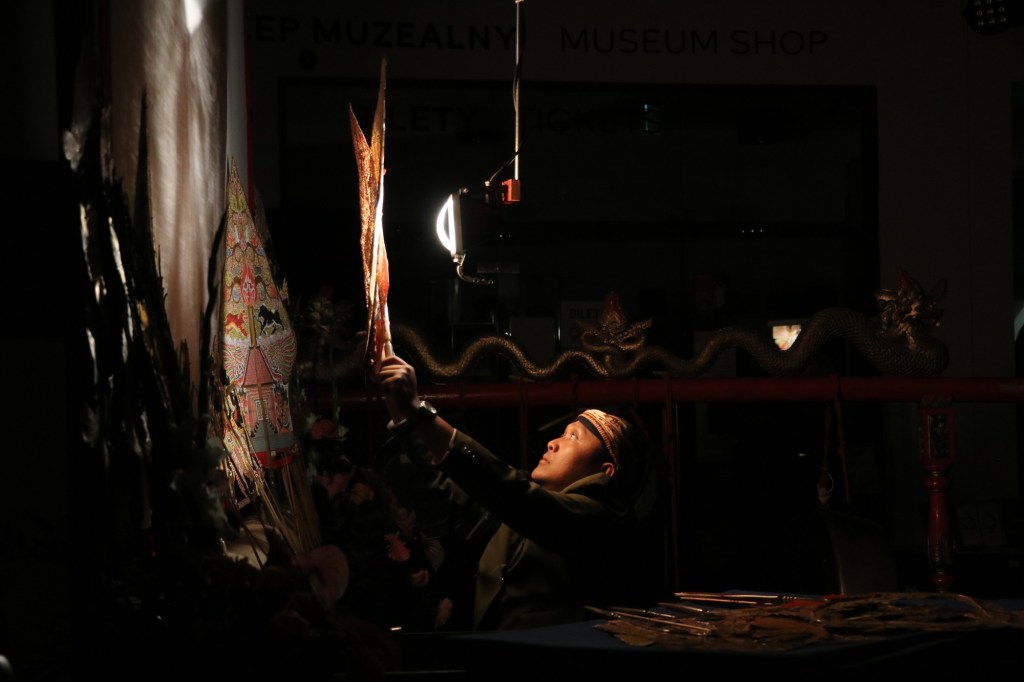
Comme vous l’avez expliqué, le wayang est passé d’une forme théâtrale vivante à une expérience radiophonique intégrée au quotidien des Javanais. Avec la sortie de cet EP sur un label indépendant, on a l’impression que vous l’emmenez dans une nouvelle dimension. S’agit-il d’une expérience ponctuelle ? Sinon, quelles pourraient être les prochaines étapes ?
Dawid Martin :
En réalité, les publications phonographiques consacrées au wayang ne sont pas une nouveauté en Indonésie. Dès les années 1970 et 1980, des enregistrements de représentations nocturnes intégrales données par des dhalangs célèbres tels que Ki Nartosabdo et Ki Manteb Soedharsono étaient déjà publiés, souvent répartis sur plusieurs cassettes audio. Nous sommes simplement heureux de pouvoir faire découvrir le wayang au public occidental à travers ce format sonore.
Lorsque je vivais en Indonésie, j’adorais écouter le soir les retransmissions de spectacles de wayang sur les radios locales. Je les trouvais incroyablement immersives : je pouvais m’allonger, écouter le gamelan et la voix du dhalang, puis souvent m’endormir bercé par cette musique. Aujourd’hui encore, grâce aux radios diffusées sur internet et aux retransmissions sur YouTube, je peux continuer à suivre des représentations de wayang malgré la distance. J’espère que notre disque, bien qu’il soit publié par un petit label indépendant, 1000 Hz , qui accomplit selon moi un travail remarquable, pourra toucher de nouveaux auditeurs curieux de découvrir des sons et des traditions musicales venus du monde entier.
Quant à l’avenir, nous prévoyons de poursuivre la collaboration entre nos deux ensembles. La création de Caraka Handayapati a été pour nous tous une expérience extraordinaire et profondément enrichissante, qui nous manque déjà. Nous espérons sincèrement avoir bientôt une nouvelle occasion de présenter le wayang ainsi que d’autres formes d’arts de la scène javanais au public occidental.
Parlez-moi de cette mixtape exclusive que vous avez enregistrée pour Musiques Obliques.
Dawid Martin :
La mixtape que nous avons préparée pour vous rassemble des enregistrements inédits qui illustrent les différentes facettes de la musique de gamelan. On y trouve des compositions issues des traditions populaires, des pièces enracinées dans la tradition classique des cours royales, ainsi que des œuvres contemporaines.
Elle s’ouvre avec Ngremo, une musique accompagnant une danse populaire de Java oriental, que nous avons enregistrée en 2014 lors d’une autre collaboration avec Gandung Djatmiko, maître de la tradition javanaise orientale. Le morceau suivant présente une musique destinée à la danse populaire lengger, originaire de la région de Banyumas, située à la frontière entre Java central et Java occidental. Cet enregistrement a été réalisé au cours de l’une de nos répétitions avec la Kasatriyan Javanese Arts Community.
Vous pourrez ensuite entendre deux extraits de wayang issus de nos répétitions pour Caraka Handayapati : une partie du pathet sanga, comprenant notamment la célèbre chanson de dangdut Ojo Dipleroki, suivie d’un passage en pathet manyura. La mixtape se conclut par un long extrait d’Imbal-Imbalan, une œuvre du compositeur américain Bill Alves, interprétée lors de l’un de nos concerts l’année dernière.
Foncez supporter le projet en achetant leur CD sur Bandcamp!
_____________________________________________________________________________________________________________
Warsaw Gamelan Group, of shadows and gongs
A shadow theatre tradition more than a thousand years old, wayang remains one of the most vibrant performing arts in Java. The independent label 1000 Hz has turned its attention to this remarkable heritage with the release of Caraka Handayapati, a collaboration between the Kasatriyan Javanese Arts Community and the Warsaw Gamelan Group. Musiques Obliques spoke with Dawid Martin and Ki Bimo Sinung Widagdo, leading figures of the Polish ensemble and renowned specialists in Javanese performing arts. In this rich and insightful conversation, they discuss the wayang’s remarkable ability to reinvent itself across the centuries, from the stage to radio broadcasts and, more recently, digital platforms, while reflecting on an intercultural project that brings Javanese traditions to Western audiences. As you explore the interview, enjoy the exclusive mixtape generously curated for Musiques Obliques by the Warsaw Gamelan Group.
Wayang kulit is a tradition that has survived for more than a thousand years. What do you think makes it still relevant and meaningful for audiences today?
Dawid Martin:
In my view, the strength of wayang and its ability to attract successive generations of audiences lies in the fact that, although it is an art form governed by rules sanctified by tradition
— concerning, for example, the shape and construction of the puppets, the stories being told, or the music — it nevertheless leaves artists considerable room for creativity.
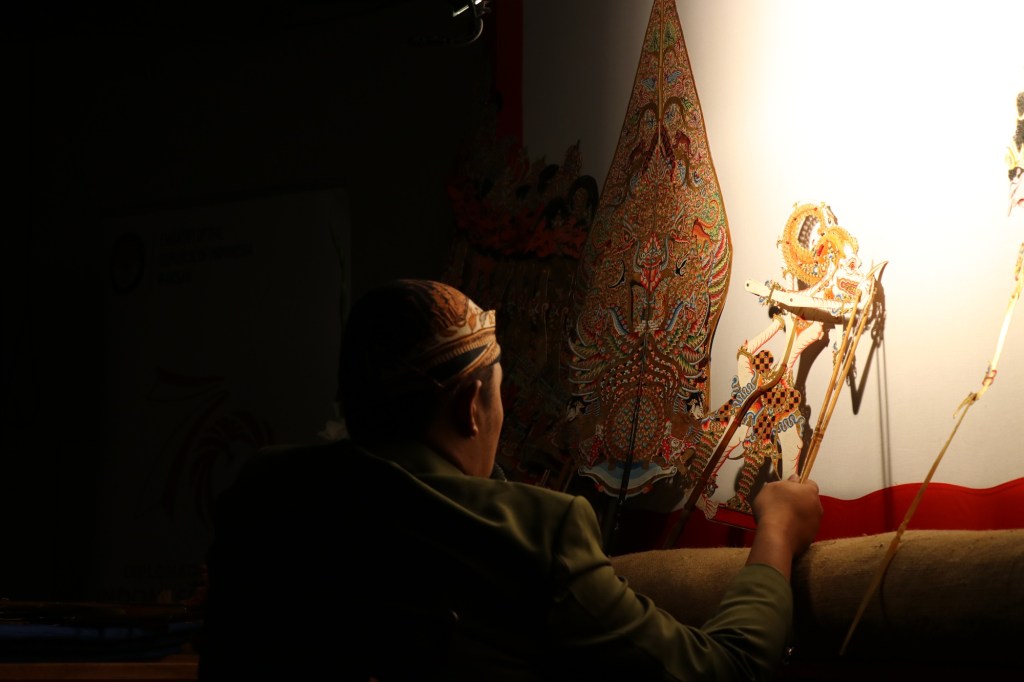
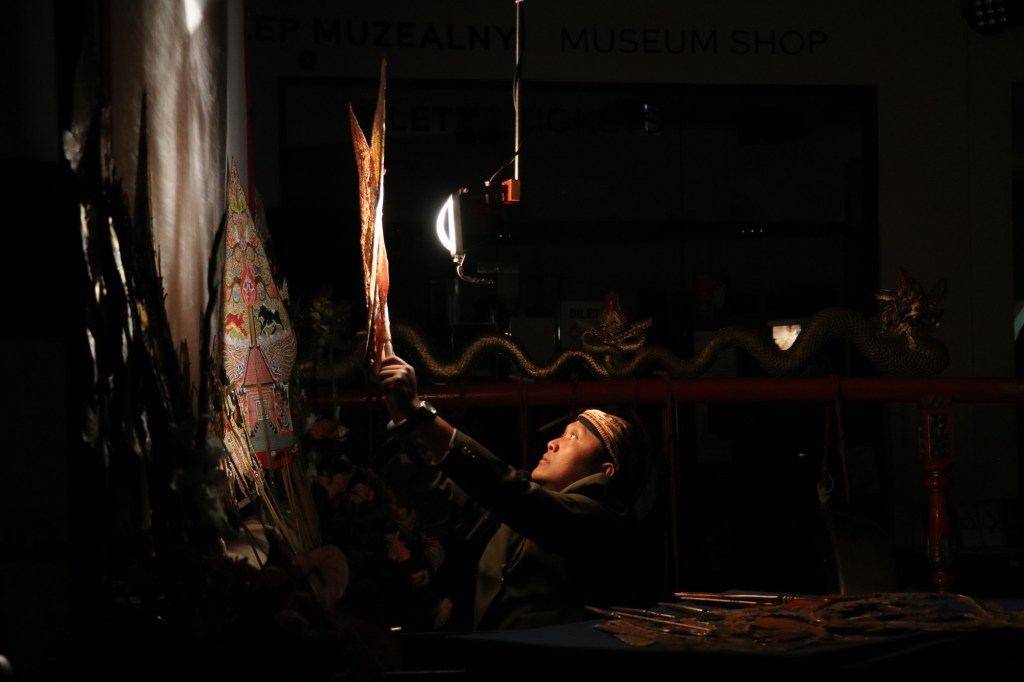
Unlike Western opera, where every word is written down in the libretto and every note in the score, a Xayang performance is an open work. The puppeteer and narrator, known as the dhalang, frequently departs from the main storyline of the Lakon, narratives derived from the Javanised versions of the Ramayana and Mahabharata, or from the world of local Javanese legends.
Since Wayang traditionally has a strong moral dimension, with good ultimately prevailing over evil, the dhalang does much more than simply tell the main story. He develops numerous side plots and comments on current events in the country and around the world, often in humorous ways and with little regard for politicians’ sensitivities. This ability to comment on contemporary life is an important part of his rapport with the audience.
Is there a lot of improvisation and interactions with the audience ?
Dawid Martin:
There is also considerable freedom in the musical dimension. Traditional wayang performances can last from dusk until dawn, and alongside the gendhing wayangan — the traditional repertoire associated with particular scenes or sections of the performance — there is plenty of room for other music. These may include new compositions, known as kreasi baru, which often become something of a musical signature of a particular dhalang and his ensemble, as well as popular Javanese songs that members of the audience can request during the performance, usually for a small fee.Another source of wayang’s appeal is precisely its interactive nature. To some extent, the audience can interact with the dhalang, thereby becoming a kind of co-creator of the performance, both in terms of the narrative and the music.
The enduring popularity of wayang is also partly due to the fact that, during the twentieth century, it quickly found its place in Indonesia’s mass media. As soon as radio appeared in Java during the interwar period, wayang performances began to be broadcast by local stations, giving rise to a new form of the art: the radio wayang drama, which is also, in a sense, what our album represents. Television added another dimension, allowing audiences to actually see the action unfolding on screen. Nevertheless, access to radio and television was largely limited to the best-known and most highly regarded dhalangs. The internet has changed this completely. Today, virtually any dhalang can stream a performance, making it accessible to audiences anywhere in the world. Through YouTube chats and online payments, audiences can still request performances of particular musical pieces or songs, just as they have done for generations.
This digital revolution has, in fact, brought about something of a renaissance for wayang. Today, every afternoon in Europe, when darkness has already fallen over Indonesia, I can simply take my smartphone out of my pocket, open YouTube, and choose from several or even a dozen live wayang performances. Some of them are watched by tens of thousands of people, many of whom actively comment in the live chat. It is a beautiful example of how new technologies can help preserve, sustain and further develop traditions that are centuries old.
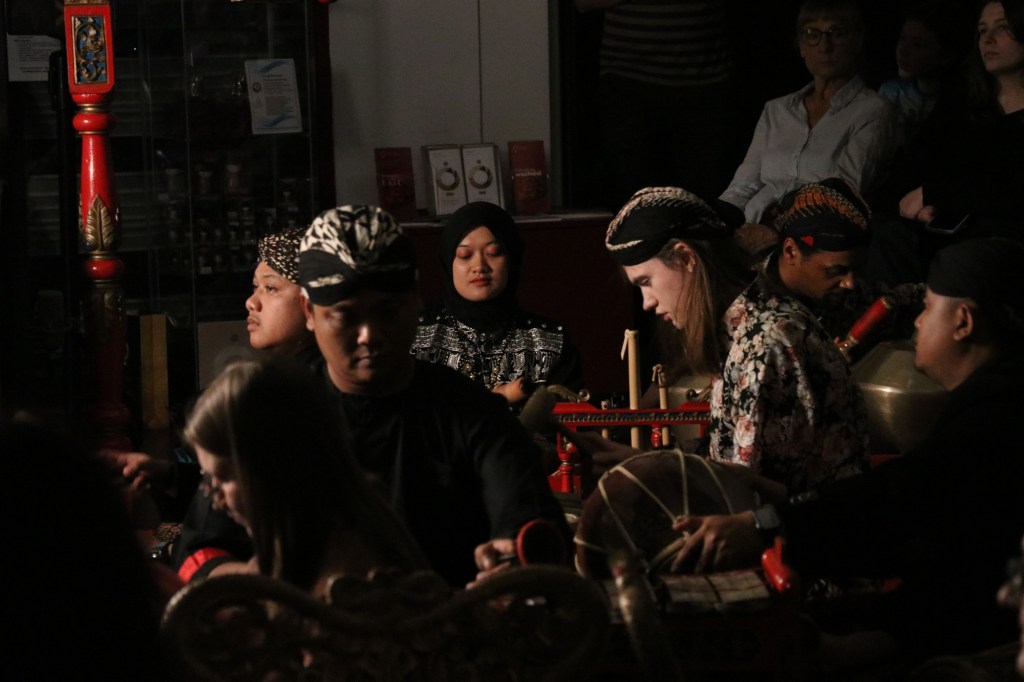
Does our digital age help this tradition to find new life, new forms?
Ki Bimo Sinung Widagdo:
Indeed, as times change and we enter the digital age, wayang no longer has to be confined to its traditional form. This is partly a response to the perceptions of some audiences, who may regard wayang as boring, old-fashioned, or even something that puts them to sleep. In response to these attitudes, creators and dalang are constantly exploring new ways of developing the art form — not only in terms of how wayang is presented, but also in the design and construction of the puppets themselves.
Today, wayang is evolving rapidly in response to the changing world around it. The digital age is a particularly good example of this transformation. An increasing number of wayang performances incorporate multimedia elements, adapting the form of the show to the way contemporary audiences experience and consume culture. Some productions use a visual language closer to that of cinema, while Indonesian rather than Javanese is increasingly used as the language of performance, making the stories more accessible to younger audiences in Indonesia.
Caraka Handayapati is the result of a collaboration between Indonesian and Polish artists. How did this intercultural partnership happened? Who got the idea and why?
Dawid Martin:
The initiative for this collaboration came from our friends at the Kasatriyan Javanese Arts Community. They had the opportunity to obtain funding from the Indonesian Ministry of Culture for an overseas project and were looking for a partner in Europe. As it turned out, we had a mutual friend, Leon Gilberto Medellin from Mexico, who is also a gamelan musician and put us in touch with each other.
When Santi (Wahyu Candra Prasanti) called me with the proposal, I didn’t hesitate for long. I welcomed the opportunity with open arms, because projects carried out together with Indonesian artists bring a great deal to our ensemble, which is itself intercultural, bringing together Poles and Indonesians living in Poland. Having masters of the tradition such as the Kasatriyan Javanese Arts Community come to Poland also gives us an opportunity to develop further, as we can learn a great deal from them during our joint rehearsals. And that is exactly what happened in this case.
There was another reason why the timing was particularly good. When Santi called me, we were in the process of preparing, together with the Museum of Asia and the Pacific and the Embassy of Indonesia in Warsaw, a major event promoting Indonesian culture in Poland called Hari Nusantara. I immediately thought that a wayang kulit shadow theatre performance would be the perfect way to bring the event to a close.
How was the creative process?
Dawid Martin:
Our dhalang, Ki Bimo Sinung Widagdo, worked on the story, while Ganang Windu Tri Nugroho selected and arranged the music. He sent me the notation of the various pieces by email, which allowed us to start rehearsing them here in Warsaw.
Once the entire performance had been put together, our friends recorded a video of it in Jakarta, shortly before their departure for Poland. They performed it with a reduced ensemble during a rehearsal and sent us the recording so that we could familiarize ourselves with the overall concept. When they finally arrived in Poland, we had less than a week to prepare the performance and make the recording. We rehearsed together for many hours every day and had an enormous amount of fun. We completely lost track of time and simply wanted to play more and more.
Did you have to overcome some natural barriers between each other?
Dawid Martin:
We did not feel any cultural barriers between us. In a way, for me this was no longer really an intercultural collaboration, because I and some of my colleagues from Warsaw Gamelan Group have lived in Indonesia for extended periods, where we learned to play gamelan and conducted ethnomusicological research on the tradition. At our rehearsals, we often speak Indonesian alongside Polish. I myself feel a very strong connection to Indonesia – my wife, Diah, is from there, and she is also a member of the ensemble and plays the gongs on the album. I often have nasi goreng for breakfast and a bowl of mi bakso for lunch. I feel that Indonesian culture has become part of my identity, while I see gamelan as my own language of artistic expression – the medium in which I feel most at home. I think that other members of Warsaw Gamelan Group share similar feelings.
Preparing this joint project with Kasatriyan Javanese Arts Community was nevertheless a significant artistic challenge for us. As Warsaw Gamelan Group, we have considerable experience performing Javanese music, but until then we had mainly performed it in the form of uyon-uyon, as Javanese musicians call concerts or recitals. Performing music for wayang requires a somewhat different kind of concentration. It is not enough simply to play one piece beautifully after another; the musicians have to connect them seamlessly and move smoothly from one to the next.
In wayang performances, changes in the music are communicated through subtle percussive signals played by the dhalang on the kotak – the wooden chest that also serves as a storage box for the puppets – and on metal plates called kerpak. We had to learn how to recognize these signals and respond to them quickly, which was not easy. Nevertheless, we managed to put everything together, and on 27th September 2025 we performed the show for an audience at the Museum of Asia and Pacific. The day before, in the same venue, we recorded the material for the album.
In a way, do you think you brought something to « modernize » the tradition?
Dawid Martin:
As for the question of modernizing tradition, in fact we did not do anything that dhalangs and musicians in Java are not already doing today. For example, alongside traditional gendhing wayangan, we incorporated a popular song in the dangdut style, Ojo Dipleroki by Ki Nartosabdo, as well as the 20th-century experimental piece Parisuko by Martopangrawit, written in 3/4 metre, which is not found in traditional gamelan music.
We also went somewhat further beyond the traditions of Java in the scene depicting Hanuman’s burning, where we performed a trance-like kecak, originating from the culture of the neighboring island of Bali. Another innovative aspect was our approach to the Ramayana itself. Rather than telling the story from the perspective of its main protagonists, Rama and Sinta, our dhalang placed a secondary character from the epic, Hanuman, at the center of the action. Hanuman’s adventures, as well as his inner conflicts, fears, desires and ambitions, became the driving force of the entire story.
Ki Bimo Sinung Widagdo:
Of course, we also departed from tradition when it came to the length and format of the performance. Instead of an all-night performance, we prepared a shorter, more condensed version, taking into account not only the expectations and attention span of a Western audience, but also the practical requirements of the project, including the need to adapt the entire work for a CD release.
This kind of condensed performance is by no means alien to the wayang practice. In Java, a shortened and more concentrated form of wayang kulit performance is known as pakeliran padat. Rather than presenting the entire story in its full traditional length, pakeliran padat focuses on the essential elements of the narrative, allowing the story to unfold in a more concise, coherent and engaging form.
In this sense, our Warsaw performance can also be seen as part of the continuing evolution of wayang kulit. The form of the performance is not fixed once and for all, but can be adapted to different audiences, venues and circumstances while retaining the essential elements of the tradition. This also applies to the music: the musical flow is condensed and the number of gongan — the gong cycles that structure the music — is adjusted according to the needs and pace of the production.
The EP is built around chapters, telling a story. Can you tell us the meaning of this story in a few
words and explain how it resonates with contemporary audiences?
Dawid Martin:
Indeed, regardless of its duration, every wayang performance is traditionally divided into three sections known as pathet, which can be compared to acts in an opera. In traditional performances, each pathet is associated with a particular period of the night. But pathet means more than simply a section of the performance: the same word also refers to the musical mode associated with a particular part of the story. The performance always begins with the music in the lowest and darkest mode, pathet nem, then moves on to the middle pathet sanga, and finally reaches the highest and brightest, pathet barang. The dramatic action follows a similar trajectory. It begins in misfortune, chaos and uncertainty, but step by step moves towards a happy ending.
This is what wayang has taught us, and continues to teach us, for centuries: in a world full of tensions, conflicts and human struggles, we should always strive to do what is right. If we do, we may find balance and hope for a better tomorrow.
As you said, Wayang evolved from a live theatrical form into a radio experience that became part of everyday life in Java. It looks like you are bringing it into another dimension, releasing this EP on such independant label. Is it a one-shot exercise? Otherwise, what can happen next?
Dawid Martin:
In fact, phonographic releases of wayang are certainly nothing new in Indonesia. As early as the 1970s and 1980s, recordings of all-night performances by popular dhalangs such as Ki Nartosabdo and Ki Manteb Soedharsono were released, often spread across several cassette tapes. We are simply happy that we can introduce wayang to Western listeners in this audio form.
When I was living in Indonesia, I loved listening to broadcasts of wayang performances on local radio stations in the evenings. I found them wonderfully immersive – I could lie down, listen to the gamelan and the dhalang, and often fall asleep to them. Today, thanks to internet radio and YouTube streams, I can still follow wayang performances from afar.
I hope that our record, even though it has been released by a small independent label, 1000 Hz – a label that, in my opinion, is doing a wonderful job – will reach new listeners who are curious about sounds and musical traditions from around the world.
As for the future, we are planning to continue collaborating between our two ensembles. Creating Caraka Handayapati was an extraordinary and wonderful experience for all of us, and it is something we already miss. We very much hope that in the near future we will have another opportunity to bring wayang and other Javanese performing arts to Western audiences.
Tell me more about this exclusive mixtape you recorded for Musiques Obliques.
Dawid Martin:
The mixtape we have prepared for you consists of previously unreleased recordings that showcase the different faces of gamelan music — including compositions representing folk traditions, pieces rooted in the classical court tradition, and contemporary music.
It opens with Ngremo, music for a folk dance from East Java, which we recorded in 2014 during another collaboration with Gandung Djatmiko, a master of East Javanese tradition. The next track is music for the folk lengger dance from the Banyumas region, on the border between Central and West Java, recorded during one of our rehearsals with Kasatriyan Javanese Arts Community. Next, you can hear two excerpts from wayang from our rehearsals for “Caraka Handayapati”: part of the pathet sangga, including the popular dangdut song “Ojo Dipleroki,” followed by pathet manyura. The mixtape closes with an extended excerpt from“Imbal-Imbalan”by the American composer Bill Alves, performed during one of our concerts last year.
Go support the project by purchasing their CD on Bandcamp!


Laisser un commentaire